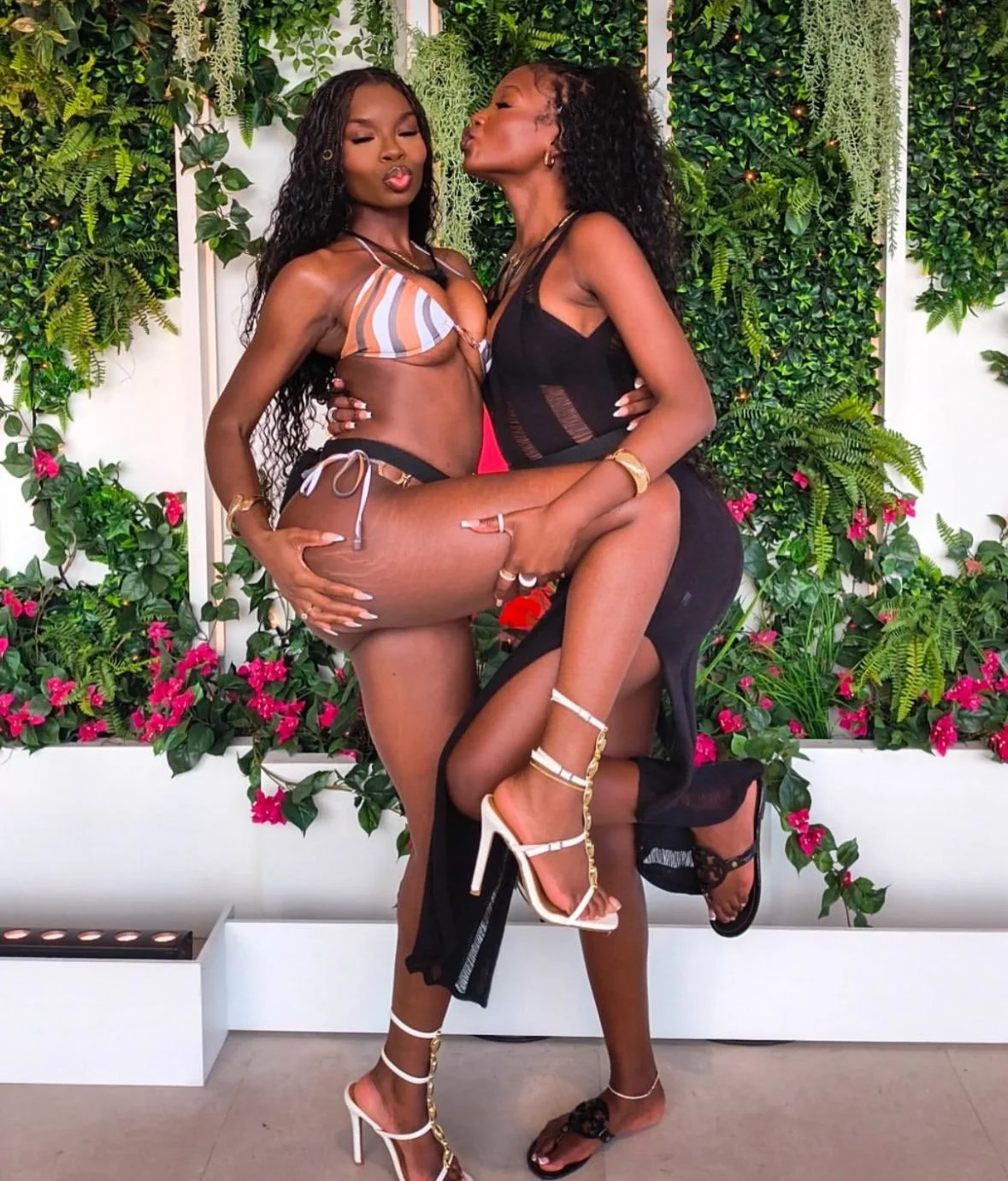
There Is A New Bombshell In The Villa: Racism
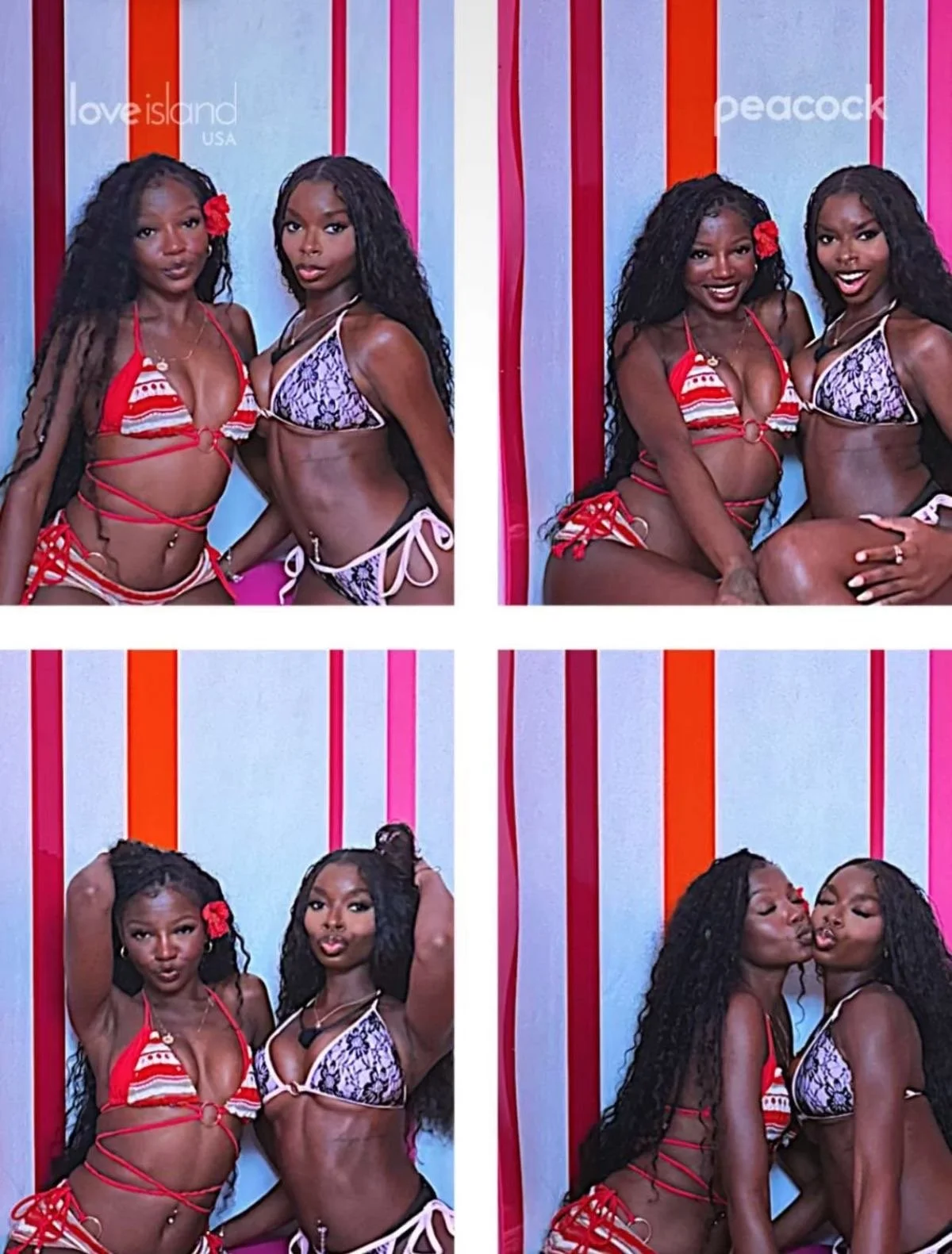
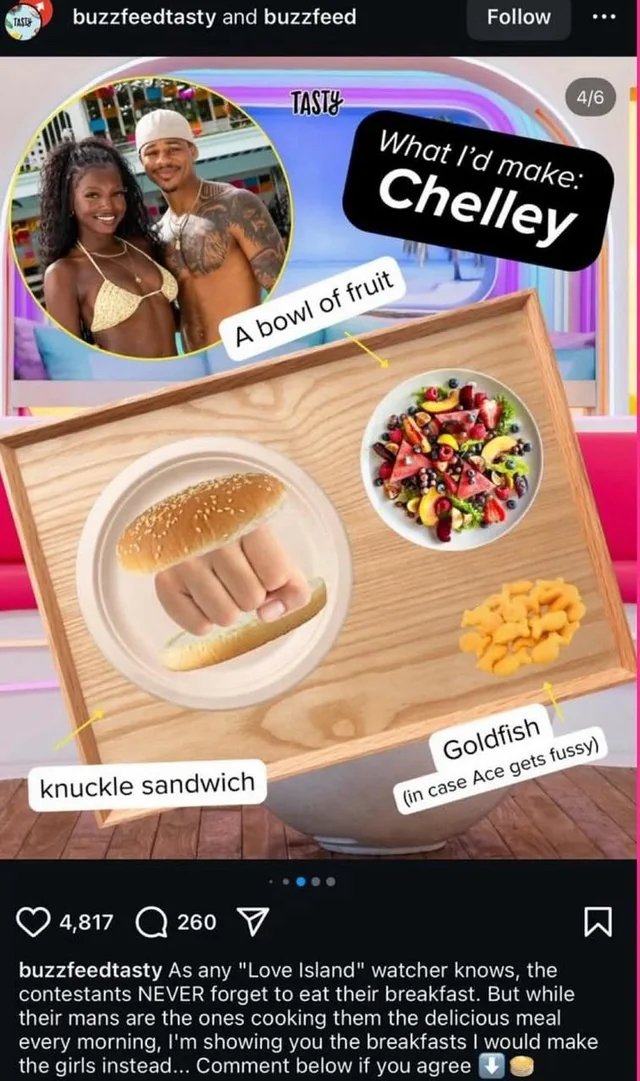
BuzzFeed, in a now-deleted Instagram carousel titled “What I Think Each Love Island Girl Deserves for Breakfast,” paired each islander with a breakfast item. BuzzFeed, in my personal opinion, has lost the plot for quite some time now. Instead of generating content that reflects the culturally conscious, post–cancel culture energy of 2020 (hey, Cierra!), they posted a tone-deaf joke that felt more like a throwback to peak 2007 microaggressions.
They paired Michelle “Chelley”—if you’re nasty—Bissainthe with a knuckle sandwich—a literal white fist slapped between two slices of wheat bread. You read that right: a white fist. Placed right next to the only visibly dark-skinned Black woman in the villa. This wasn’t just some quirky breakfast pairing—it was a dog whistle. A racist visual punchline dressed up as “humor.” In a post-George Floyd media landscape that claimed to prioritize inclusion and anti-racism, this was blatant regression.
Upon hearing the news, I was ready to cancel BuzzFeed as fast as Love Island producers evicted Yulissa and Cierra from that island. But this wasn’t just about BuzzFeed. This was about the larger racial dynamics of Love Island—the unspoken, often denied, racial scripts that Black women are forced to perform under, and punished when they don’t.
For context, for those who may live under a rock, Love Island USA is a show that whisks away 10 hot-and-ready (à la Little Caesars) eligible bachelors and bachelorettes, all looking for love on vacation. This season's destination? Fiji. All summer long.
With over 100 hidden cameras throughout the villa, viewers get a front row seat to everything—from milk being spit into other islanders’ mouths during hot and steamy challenges, to twerking for thee Meg the Stallion (who, by the way, is a fellow alumna of my alma mater—GO TIGERS). To the endless iterations of people becoming “closed off,” declarations of being “locked in,” constant “can I pull you for a chat?” convos, pancakes shaped in the letter C, and firepit speeches that somehow always feel like the final countdown.
And let’s not forget the Hideaway, where Amaya and Bryan will forever have “eat that kitty ” etched into my brain. All narrated by comedian Iain Stirling and hosted by Ariana Madix—who secretly wants to be a bombshell, but whose attention span is better suited for the yapping of Vanderpump’s dog.
In previous seasons, we saw the same casting patterns—Black women as the minority, mostly only “allowed in” if they were racially ambiguous or had looser curl patterns .But as soon as I saw the boho knotless bussdown, I had hope—hope that this season might birth another PPG love story. But no—Hurricane Huda’s hoodrats and America ruined everything the moment they kicked Ace and Chelly out of my villa.
Let’s talk about racial gaslighting
Now, we’ll get into the micro-aggressions served cold to my beloved Bama Barbie, Olandria, later in this rant. But we must start with Chelley—because it was this BuzzFeed article that opened my eyes to just how much America was puppeteering a racist narrative behind the scenes. Not just in editing, but in public voting, commentary, and even who was deemed “deserving” of screen time and softness.
Chelley is a Haitian-American model, influencer, and entrepreneur. The kind of dark-skinned, intelligent, self-assured Black woman reality TV claims to celebrate —but never fully protects. The kind of Black woman who gets labeled “intimidating” for simply existing.
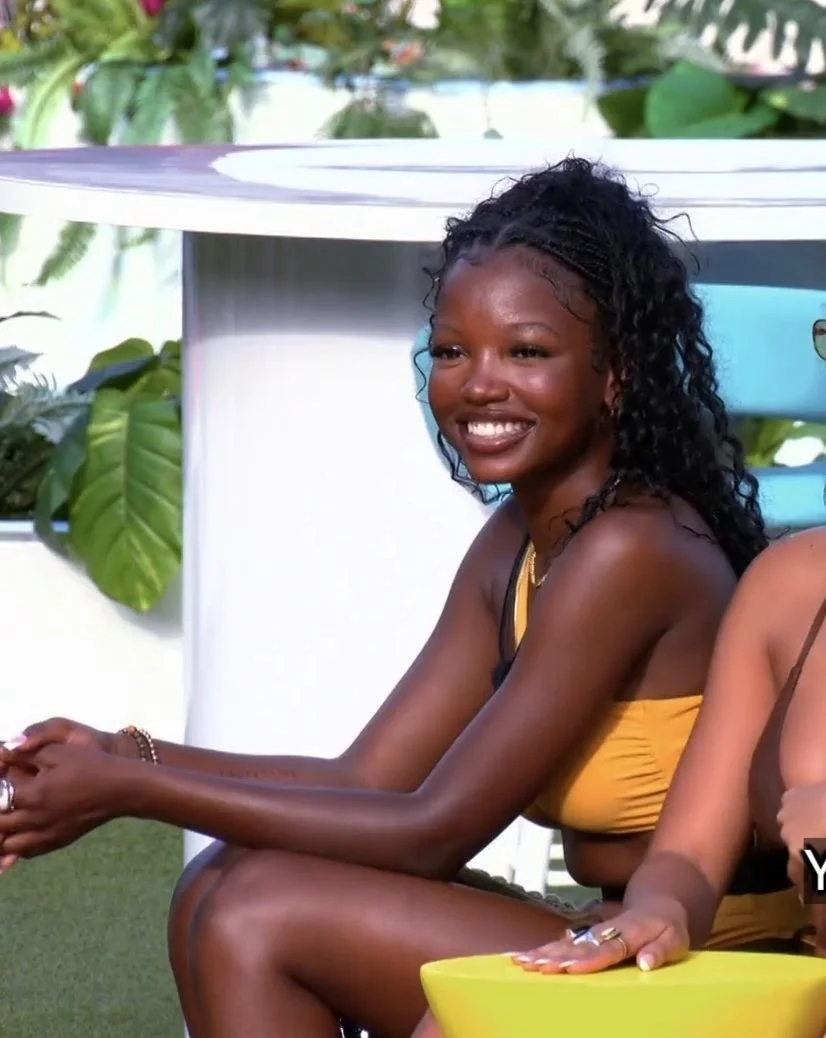
Upon entering the villa, Chelley soon realized that the guy (Ace) she met drunkenly outside the club was also in the villa looking for love, and it was then that America decided (amongst other things) that Chelley and Ace’s love story was disingenuous. We’ve all met a guy, spoken in the DMs, and stayed in contact via comments of support or likes—but when your skin is as melanated or, in Ace’s case, as tatted, the extension of grace—or even the basic understanding that correlation is not causation—is seldomly granted. Love Island this season felt more like Influencer Island. Each and every islander had crossed paths before—whether at a party, a brand event, or through mutuals online—but because Ace and Chelley had the strongest connection, their comfortability with each other and their ease became a threat.
A Black man and a dark-skinned Black woman showing mutual interest? That’s when the storylines suddenly get rewritten. Their connection wasn’t cute, it was calculated. Their comfort wasn’t romantic, it was “convenient.” This is textbook racial bias—a phenomenon where Black people, especially when seen as “too close,” are framed as schemers rather than lovers.
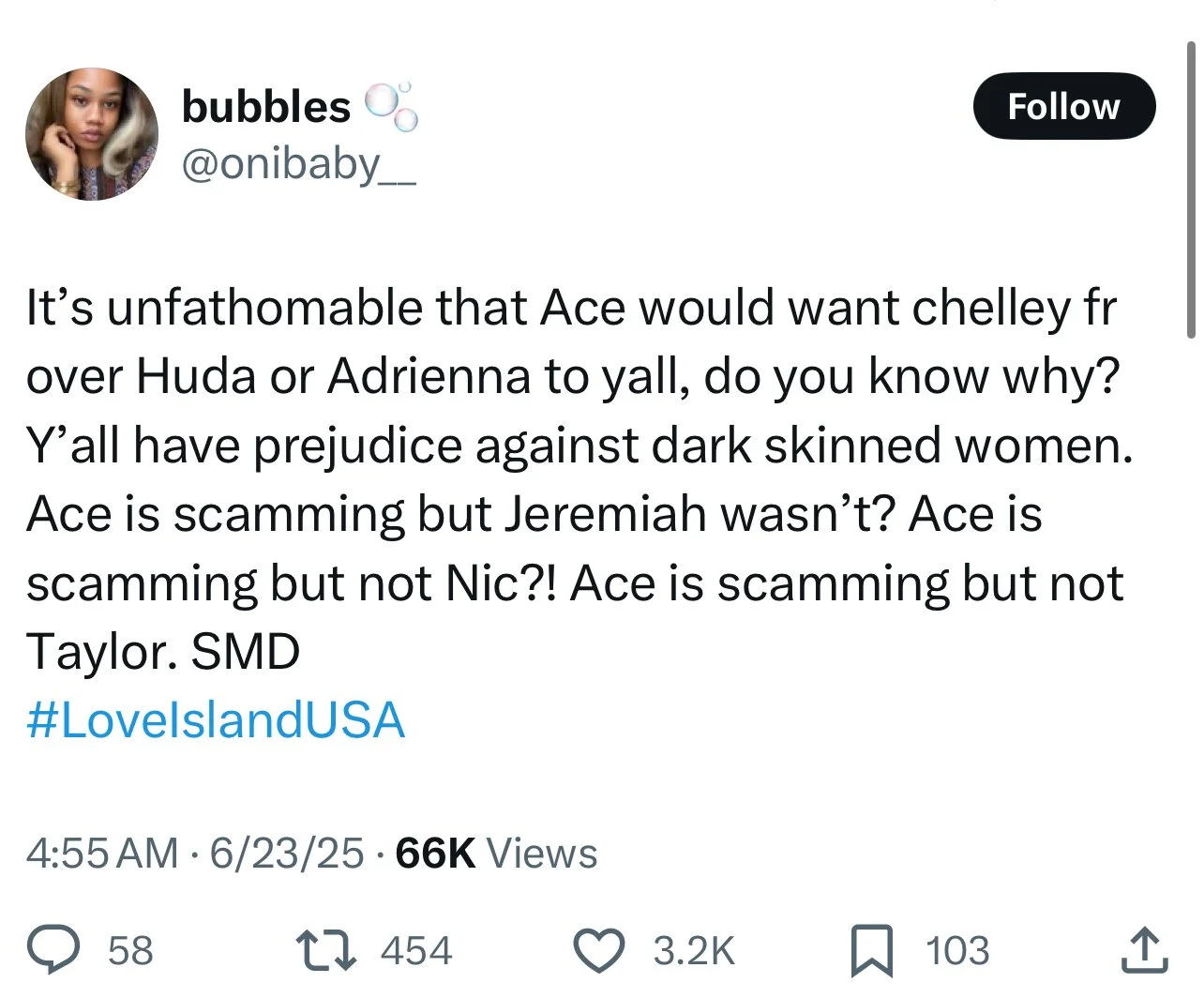
Let’s name it: Colorism.
Despite Chelley’s consistent support of her fellow Islanders, she was labeled the “mean girl” a role usually assigned to Black women who simply stand up for themselves!
Which was completely and utterly ubsurb! When Huda and Jeremiah’s went through their whirlwind of love bombing and delusion. Who was there to be a listening ear? Chelley. When Huda didn’t know whether or not she should tell Jeremiah she was a mom, who reassured her? Chelley. So it stung as a viewer to watch Huda, a racially ambiguous woman, (nose job, veneers, and all) be so blatantly disrespectful to Chelley during the heart rate challenge. Instead of mirroring the same courtesy given to her during her coupling with Jeremiah, Huda put her literal “kitty” in Ace’s face. Her “hoodrats” will say it was just a challenge but we all know the lengths in which each female islander went to avoid kissing or overtly flirting with Jeremiah during challenges. And so, Huda’s “performance” did not only increased Ace’s heart rate the most but it also lit fire to the harmful tropes beset on Black women.
In true “woe is me” fashion Huda did her lap around the villa asking each islander “did she do too much?” “Would it make it better if (I) she was ugly?” Taking no accountability whatsoever. Typical. But it was Chelley’s calm but firm response that had every Black girl cheering at TV, in a swift motion she said to Huda, “ I’ll talk to you later my emotions are too high to have this chat right now.”
Her response wasn’t aggressive. It was self-regulation—a survival skill Black women have mastered in predominantly white or racially hostile environments for decades. And still? That wasn’t enough. TikTok and X punished her for not performing the hyper-smiling, ever-patient, “strong Black woman” role white audiences are most comfortable with. That’s respectability politics, and it’s a trap.
In that moment, Chelley forever marked herself as a mature and self-aware individual in a situation full of ambiguity. Think about it: You have these emerging couples trying to find their footing, trying to establish emotional security—yet they’re constantly being thrown into challenges that toe the line of what’s appropriate in the early stages of dating. So for Chelley to clearly express her boundaries, while still speaking respectfully to Huda, was not only refreshing—it was revolutionary for reality TV.
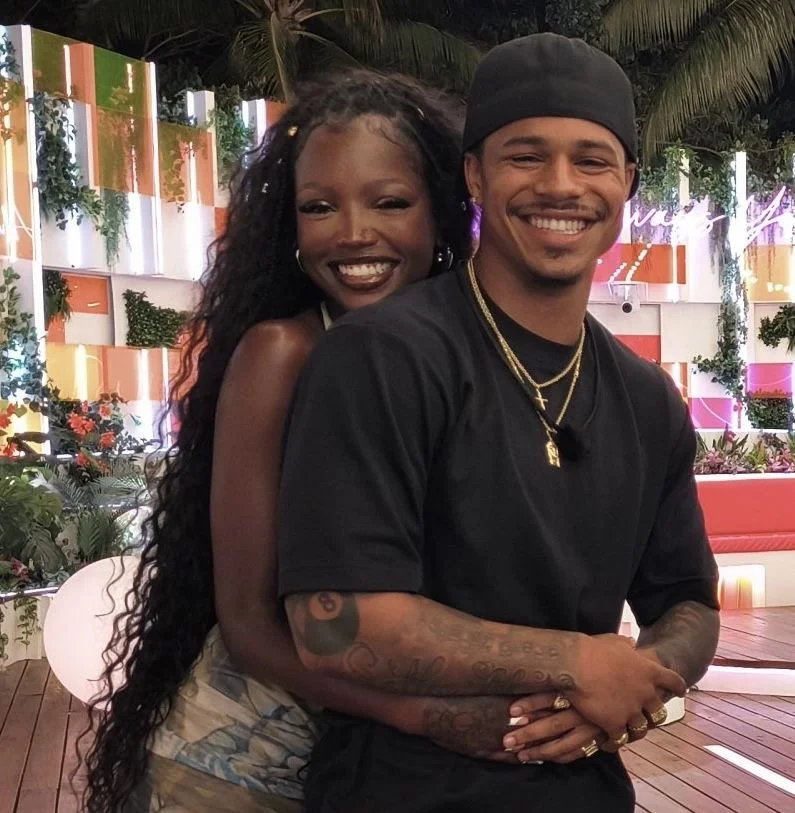
And then came Olandria
My Bama Barbie, Olandria Carthen. Like Chelley, she became America’s punching bag simply for being completely and utterly regal to look at. When Mrs. D (Bring It!—thank you for being the show that keeps on giving) said she wanted the baddest on the floor, she was most certainly talking about Miss Carthen! A Tuskegee grad from Alabama making moves in Houston, Olandria entered the villa with an aura—dare I say—a “girl’s girl” energy, which I use sparingly considering how that very term was dragged through the mud this season. Almost immediately, Olandria took a liking to Taylor. She was looking for a country-girl-meets-a-good-man love story. But let’s be real—Taylor just wasn’t giving that “kid in a candy store” feeling he claimed to be searching for.
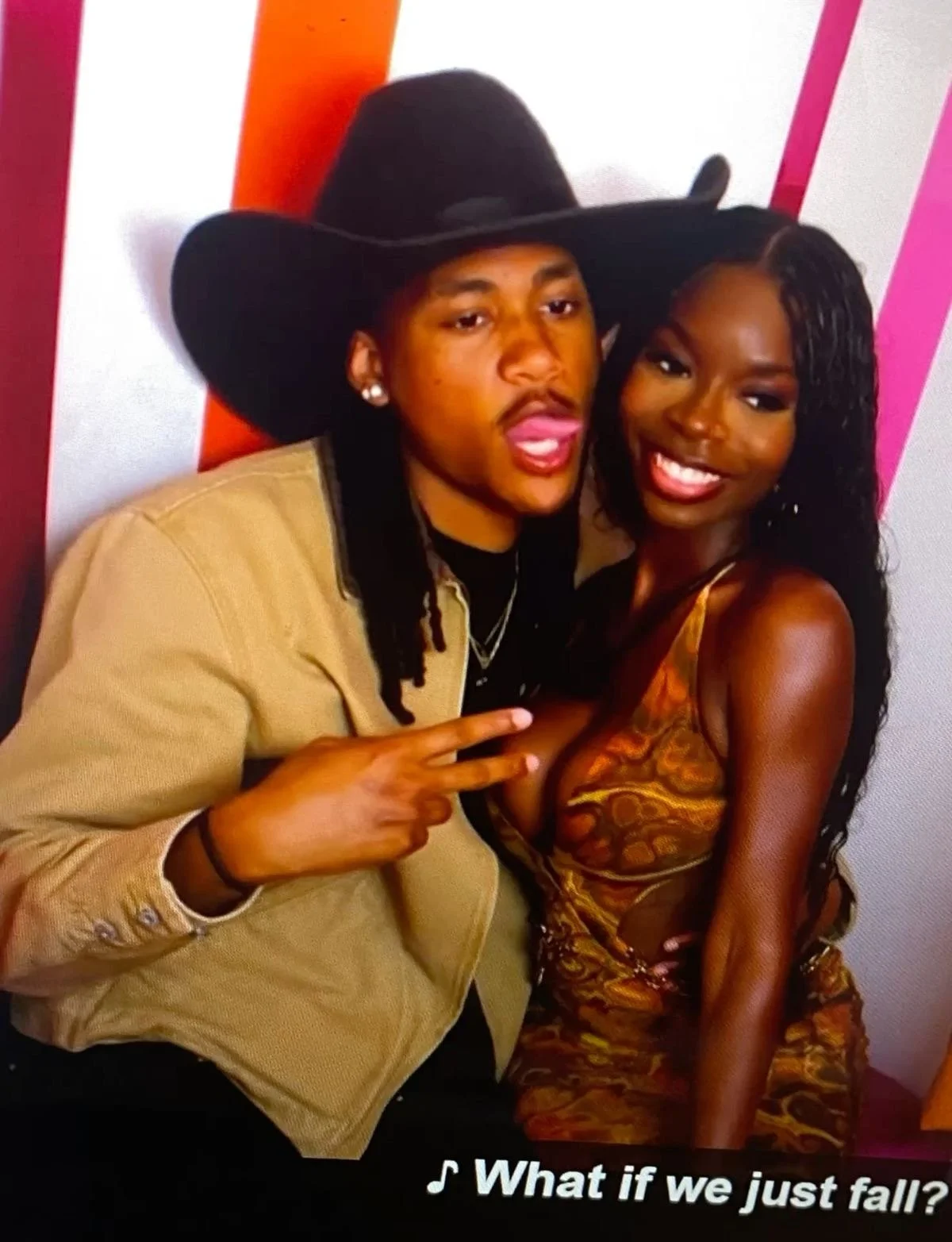
Now there is the infamous scene where he tells Ace he just wasn't that attracted to Olandria. And while that hurt to hear, I think the audience never quite felt a spark between the two either. It always felt a little… off. And when Taylor eventually chose Clark (after chasing Olandria for an entire season) we now know it was more of a scheme to stay in the villa longer than any genuine interest. Olandria had every right to check Taylor during the Standing on Business challenge—and when she did, America acted like she’d flipped a table on national television. The internet cried out that she “did too much” or was “delusional” for thinking Taylor ever liked her. But let’s not forget: we only saw one hour out of a 24-hour day. We have no idea how much Taylor was putting on, crafting a facade of love and connection, or breadcrumbing her into thinking something real was there.
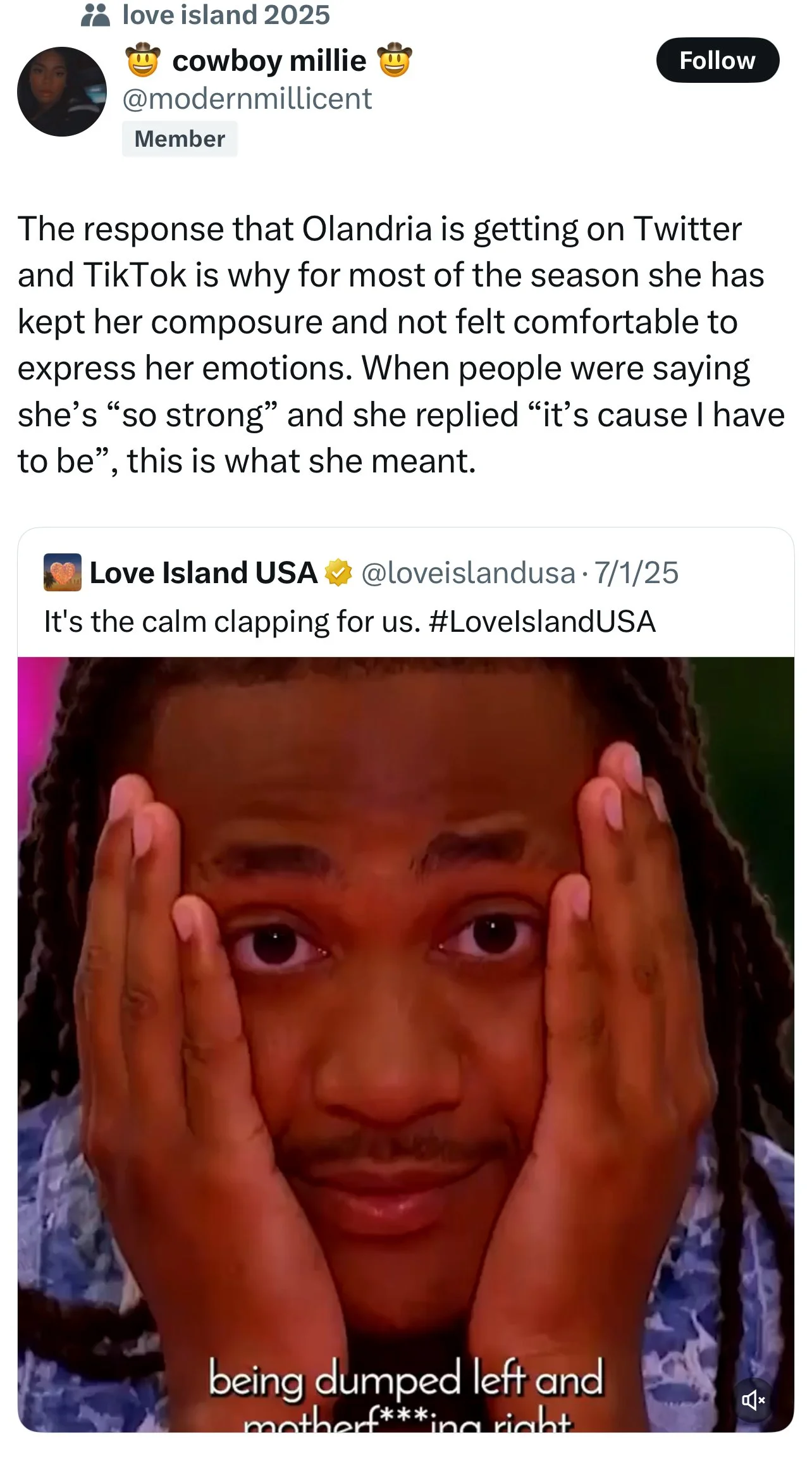
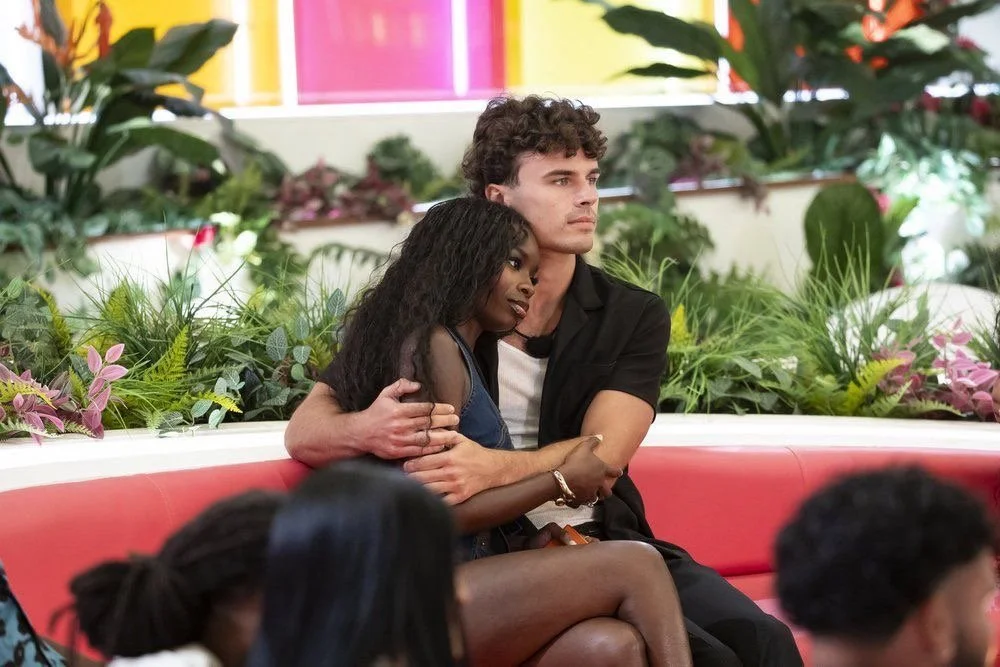
Now, of course, I am skipping over a few things, most notably Huda weaponizing her tears to paint Olandria as a villain just a few episodes prior, but it was Olandria and Taylor’s breakup that truly served as the catalyst for American racism to rear its head. After pouring so much emotional labor into a connection where she was never fully chosen, never made to feel safe or prioritized, Olandria began to move forward. Cue Nic—recently single after Cierra’s departure—and suddenly, thanks to a mix of producer orchestration and fan-fiction-level TikToks, Nicolandria was born.
TikTok loved it. Nic’s mother co-signed it. But America? Oh, America struggled. They just couldn’t wrap their pubescent minds around the fact that their Florida white boy Nic (no disrespect to the iconic Detroit hustler Rick) could genuinely be attracted to the melanated goddess that is Olandria. Revealing that truth: that desirability isn’t exclusive to white proximity, and that Black women like Olandria can and do get chosen—was too much for some viewers to handle. So instead of celebrating this unexpected pairing, they tried to discredit it. Called it forced. Called it everything but what it actually was: a soft, slow-burn romance built on emotional availability, open communication, and mutual attraction.
Because when a Black woman is finally met with tenderness, people will find every excuse to invalidate it especially when that tenderness doesn’t come in a package they expected or approved of.
The real villain? Anti-Blackness.
What happened to Chelley and Olandria was a reflection of the uncomfortable reality that grace, softness, and complexity are still rarely afforded to Black women on reality television.
Chelley set boundaries, stayed grounded, and expressed herself with honesty, yet was labeled angry for doing what others were praised for. Olandria opened her heart, navigated rejection with dignity, and found an unexpected connection in the most tender way possible. Yet she too was met with disbelief, microaggressions, and dismissal.
Both women dared to be full human beings in a space that wanted to flatten them into tropes. And in doing so, they exposed the biases many viewers still carry and the limits of how society defines who gets to be loved loudly, gently, and without condition.
I and all of Black Twitter will be the first to say that Chelley and Olandria didn’t just play the game—they disrupted it. And for that, they deserve not just our defense, but our applause.