Seven Days In June (2021) Tia Williams
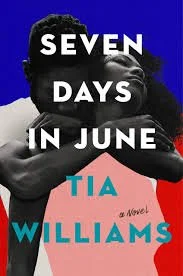
They say art mimics life, and in Tia Williams’ Seven Days in June she proves just how true that sentiment can be. Eva (Genevieve—though I’ll never pronounce it the same again) and Shane’s love story is one riddled with regret yet fueled by a hunger for love so raw it made me question whether passion in adulthood can truly survive. Passion is untamed in youth, but once maturity settles in—with all the baggage of trauma and substance abuse—can that same ferocity persist?
And then there’s Audre. Listen, Audre is the embodiment of the kind of daughter I’d dream of having: fierce in her beliefs, grounded in her sense of self, and somehow well-adjusted to the chaos of adult life. And that name? Audre Zora Toni Merci Moore? To die for. Absolutely love, love, love.
Tia Williams’ writing had me talking back to the book at times, unpacking the layers of trauma she threads through her imagery. The most striking symbol for me was the cameo ring—its passage across generations and finally to Audre. Watching its purpose unfold felt essential, almost like being gifted a piece of understanding.
Ty’s death gutted me. While it served as a catalyst for Shane’s growth and tested his sobriety, I couldn’t stop rooting for that kid. I know people like Ty in my own family, and I often wish they’d had a Shane to guide them. His absence forced me to confront my own grief…the painful truth that we can’t save everyone. But what we can do is show up, as much and as often as we can.
Through it all, Eva and Shane’s bond reminded me that while teenage love may be instantaneous, adult love requires patience. Sustaining love, it turns out, is about presence. About simply being there.
I love, love, love this book and will definitely be recommending it. You can grab Seven Days in June in hardcover, paperback, ebook, or audiobook (narrated by the buttery voice of Mela Lee) at Amazon, Barnes & Noble, Apple Books, and Audible.