Erasing Ida B. Wells
Young Thug and the “snitch wars” of Atlanta have practically swallowed the Black media landscape. I am not someone who’s ever engaged in street politics, yet somehow I know far more about why YSL member Woody “ratted” and why Gunna “didn’t stay true” than I should. That fact alone speaks volumes about what is being force-fed into Black discourse. The endless cycle of jail phone calls, court transcripts, and TikTok commentary has become the dominant conversation, a digital soap opera. And it makes me wonder: does this generation know as much about the history of the NAACP as it does about Atlanta’s rap beefs?
That, readers, is the new-age cakewalk.
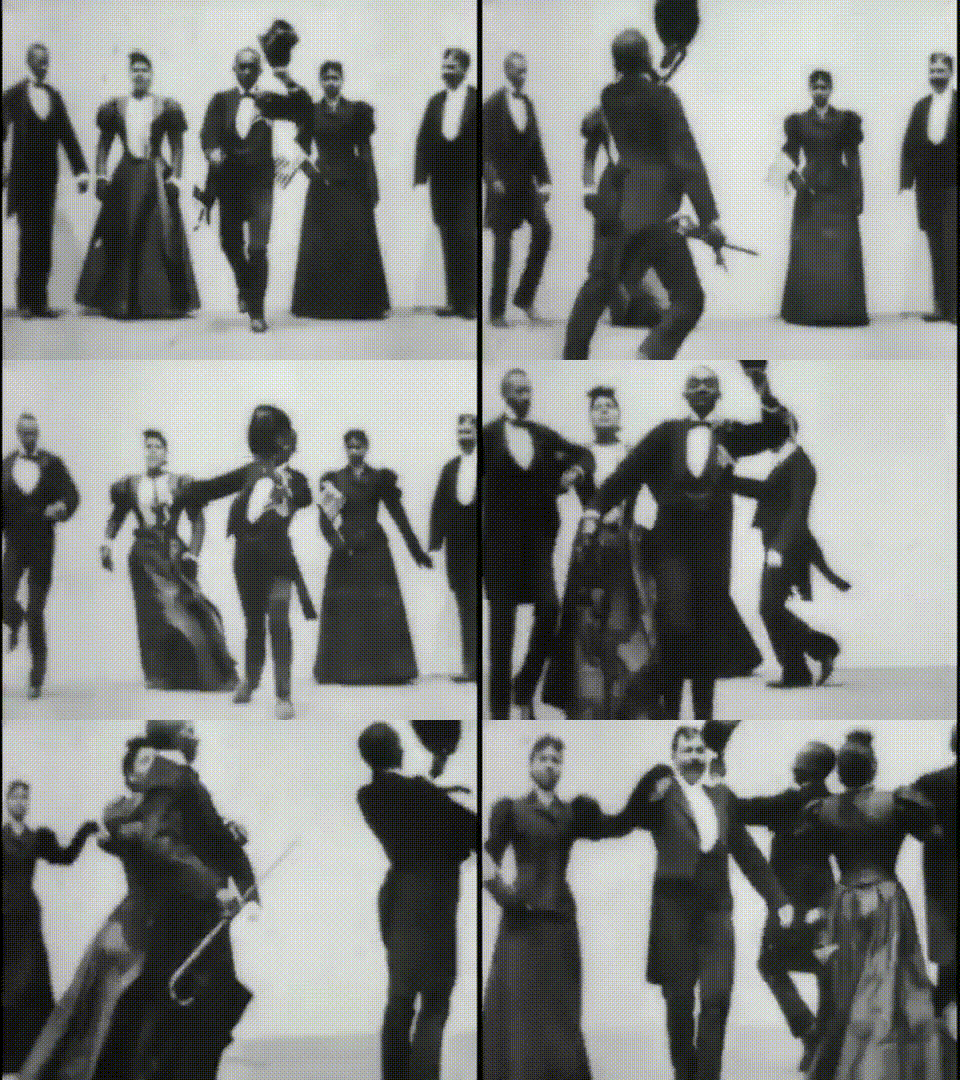
The “cakewalk” was a dance created by enslaved Black people, a satirical performance mocking white elites. Ironically, it was appropriated by white audiences who consumed it as entertainment, never grasping its deeper critique. Today, we are living in another iteration of the cakewalk: spectacle over substance, distraction over history. But let’s step down from the trending cycle for a moment and turn to a different exclusion that has shaped Black political life for over a century — Ida B. Wells’ omission from the NAACP’s Founding Forty.
The Founding of the NAACP
The NAACP was founded in 1909 by a coalition of Black intellectuals and white abolitionist allies committed to racial justice. Among the early organizers were W.E.B. Du Bois, Ida B. Wells, Mary White Ovington, and William English Walling. At its inception, critics immediately questioned why so many white progressives were granted leadership positions in an organization ostensibly dedicated to Black liberation. As Audre Lorde would later remind us, “The master’s tools will never dismantle the master’s house.”
Du Bois himself was the only Black person on the NAACP’s executive board — a board that controlled finances, decision-making, and public strategy. This meant the organization’s earliest direction was shaped by white liberals and socialists, not the very people it claimed to serve. Wells, who had built a fearless reputation as a journalist and anti-lynching crusader, knew the dangers of such compromises.
Ida B. Wells and the Founding Forty
The NAACP’s “Founding Forty” ceremony was designed to cement the names of the nation’s most radical thinkers of the era. Wells was told by Du Bois that she would be included. Yet, on the day the names were read aloud, she was excluded…her place replaced by Celia Parker Woolley, a white suffragist and friend of Du Bois.
Wells was outraged. She protested in real time, her voice rising against the erasure. Du Bois hastily reinserted her name, but by then the damage was done. Wells refused to align herself with an organization that had made her expendable. For her, silence in the face of erasure was complicity. She understood — even then — that visibility without power was just another performance of inclusion.
Zora Neale Hurston once wrote, “If you are silent about your pain, they’ll kill you and say you enjoyed it.” Wells’ protest was not simply personal; it was political. She knew the erasure of Black women’s voices would become a pattern in movements led by Black men seeking validation from white power structures.
Kanye West — yes, I am fully aware of his rhetoric as of late — once rapped,
“they made us hate ourselves and love their wealth.”
This lyric came nearly a century after Wells’ erasure, but it resonates with the same critique: many Black men of the early 20th century pursued validation through capitalism, prestige, and proximity to whiteness, often at the expense of Black women’s leadership.

Respectability Politics, Bourgeois Alignments, and the NAACP
Du Bois’ decision to replace Wells with Woolley was not an isolated incident; it reflected the NAACP’s deeper alignment with respectability politics and bourgeois values. In an era where Black men often sought recognition through proximity to white institutions, Black women’s leadership was treated as negotiable — their brilliance minimized in favor of respectability and male authority.
This alignment has had lasting consequences. The NAACP’s dependence on white funding and political connections created a structural vulnerability that still echoes today. Consider the Rachel Dolezal scandal of 2015: a white woman leading a chapter of the NAACP by masquerading as Black. That she could slip through the cracks underscores a troubling truth — that whiteness, even in spaces built for Black advocacy, has always been afforded legitimacy that Black women are forced to fight for.
No NAACP Without the NACWC
Here’s what history often forgets: there would be no NAACP without the groundwork of the National Association of Colored Women’s Clubs (NACWC). Founded in 1896 under the leadership of Mary Church Terrell, the NACWC laid the intellectual and activist foundation for the NAACP. Its motto ,“Lifting as we climb”, was the earliest articulation of what we now call racial uplift, the belief that education and activism could dismantle systemic racism. When the NAACP was formed in 1909, Terrell herself became a charter member. Yet the organization rarely acknowledges how much it owes to Black women’s labor, organizing, and vision. Without them, the NAACP would not exist. And yet, like Ida B. Wells, their contributions are often sidelined, rewritten, or silenced.
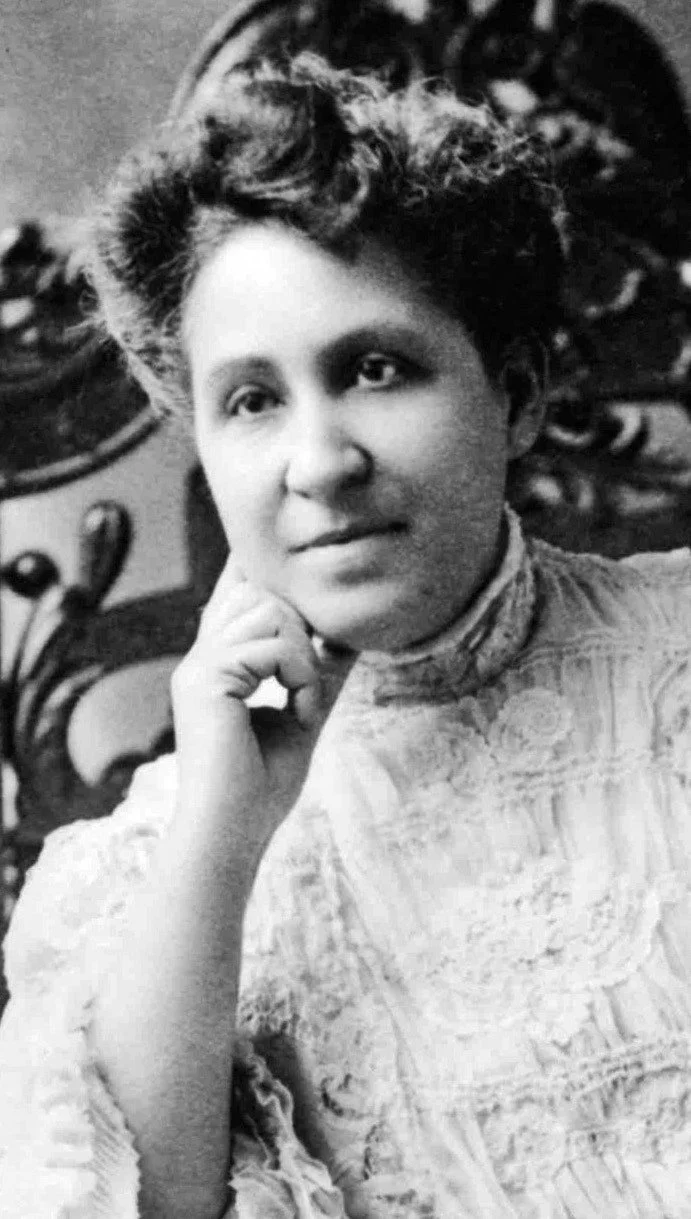
Thee Mary Church Terrell
The exclusion of Ida B. Wells from the Founding Forty was not an accident; it was a blueprint. It set the tone for how Black women’s leadership would be contested…rewritten in movements supposedly committed to liberation. As we consume the latest digital cakewalk — Atlanta rap trials, TikTok gossip, or whatever spectacle trends next — we must resist the cycle of distraction. To truly honor Wells and the women who built the foundation of our institutions, we must interrogate not only who is remembered, but also who is deliberately forgotten.
Because without Black women, there is no freedom struggle. And without Ida B. Wells, the NAACP’s story is incomplete.